Home applications services drug discovery

Drug discovery workflows with biologically relevant 3D models

Drug discovery teams need models that can support early biological insight, scale into screening, and connect to downstream readouts without losing the complexity that shapes treatment response.

RASTRUM™ helps researchers generate 3D cell models for preclinical drug development, hit identification, phenotypic screening, lead optimization, toxicology testing, drug resistance studies, and combination therapy workflows.

Use RASTRUM to move from exploratory model development into controlled, plate-based workflows for drug profiling, imaging, viability, molecular analysis, and other downstream assays.
Drug discovery models need to do more than grow cells

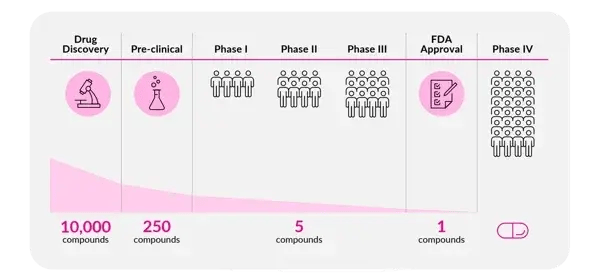
2D cultures can support early assays, but flat formats often miss specific cues that shape phenotype, viability, signaling, and drug response. Animal models can provide system-level context, but they are costly, time-consuming, and do not always translate to human biology. Manual 3D approaches can add biological context, but setup variability and sample handling can make results harder to compare across conditions.

For preclinical drug development, researchers need models that connect biologically relevant 3D culture with workflow control, compatible readouts, and enough scale to support screening and decision-making.

Use RASTRUM when your team needs to:

  • Model disease-relevant phenotypes and treatment response in 3D
  • Compare compounds, combinations, and resistant contexts across defined model conditions
  • Tune matrix and architecture around a biological question and downstream readout
  • Move from exploratory 3D models into reproducible, plate-based workflows
  • Support imaging, viability, cytotoxicity assays, molecular analysis, and other readouts where compatible with the model design
Find the drug discovery workflow you need to improve

Different teams come to 3D models with different scientific questions. Use these sections to find the application area that best fits your program.

I need target or mechanism insight

Use disease-relevant 3D models to investigate target biology, pathway response, and mechanism of action in controlled model systems.


I need phenotypic screening or lead optimization

Use scalable 3D models to compare compound response, prioritize hits, and evaluate lead candidates in biologically relevant contexts.

I need toxicology or drug safety data

Use 3D liver model workflows to support hepatotoxicity, drug-induced liver injury, acute exposure, chronic exposure, viability, and related toxicology testing readouts.

I need oncology or drug resistance models

Use 3D cancer models to study treatment response, tumor-stroma effects, drug resistance, and combination strategies, with deeper oncology content available on the Cancer page.

I need patient-derived or combination therapy models

Use patient-relevant 3D models to compare response across treatments, combinations, or model contexts in preclinical research workflows.

From 3D model setup to downstream drug discovery readouts

RASTRUM connects model design, model generation, and downstream analysis into a practical workflow. Matrix selection, architecture selection, selected cells, plate format, culture conditions, treatments, and readouts should be planned together so the final model answers the drug discovery question.


Select matrix conditions

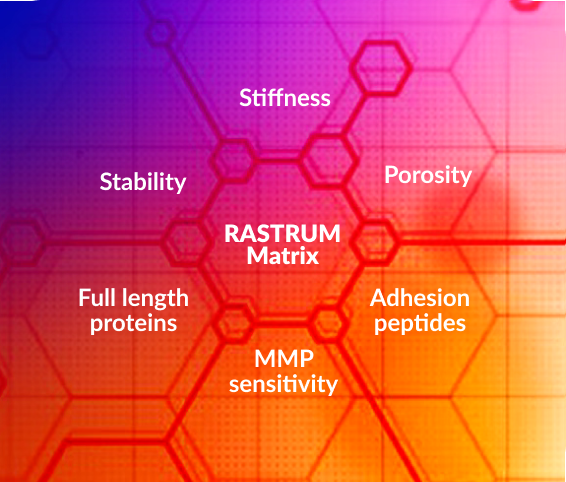
Choose RASTRUM Matrices based on cell source, stiffness, adhesion cues, ECM components, remodeling requirements, and assay goals.
Explore Matrices

Choose the cell model architecture

Select the physical model format based on the application, such as imaging, screening, co-culture, migration, invasion, histology, model recovery, or molecular analysis.
View Architectures

Generate 3D models in standard plate formats

Use RASTRUM or RASTRUM Allegro to generate matrix-embedded 3D models in formats aligned to the workflow, from exploratory studies to higher-throughput screening.
RASTRUM Allegro

Treat, image, measure, and analyze

Plan downstream workflows such as imaging, viability, fluorescence, luminescence, biochemical assays, cytotoxicity assays, gene expression, sequencing, RNA/DNA analysis, protein analysis, or flow cytometry based on model format and study design.
Learn More

Integrate with compatible systems where appropriate

RASTRUM-generated models can be planned for compatibility with high-content imaging, automated liquid handling systems, robotic workstations, and automated image analysis when plate format, model architecture, assay design, and equipment are suitable.

Explore Platform
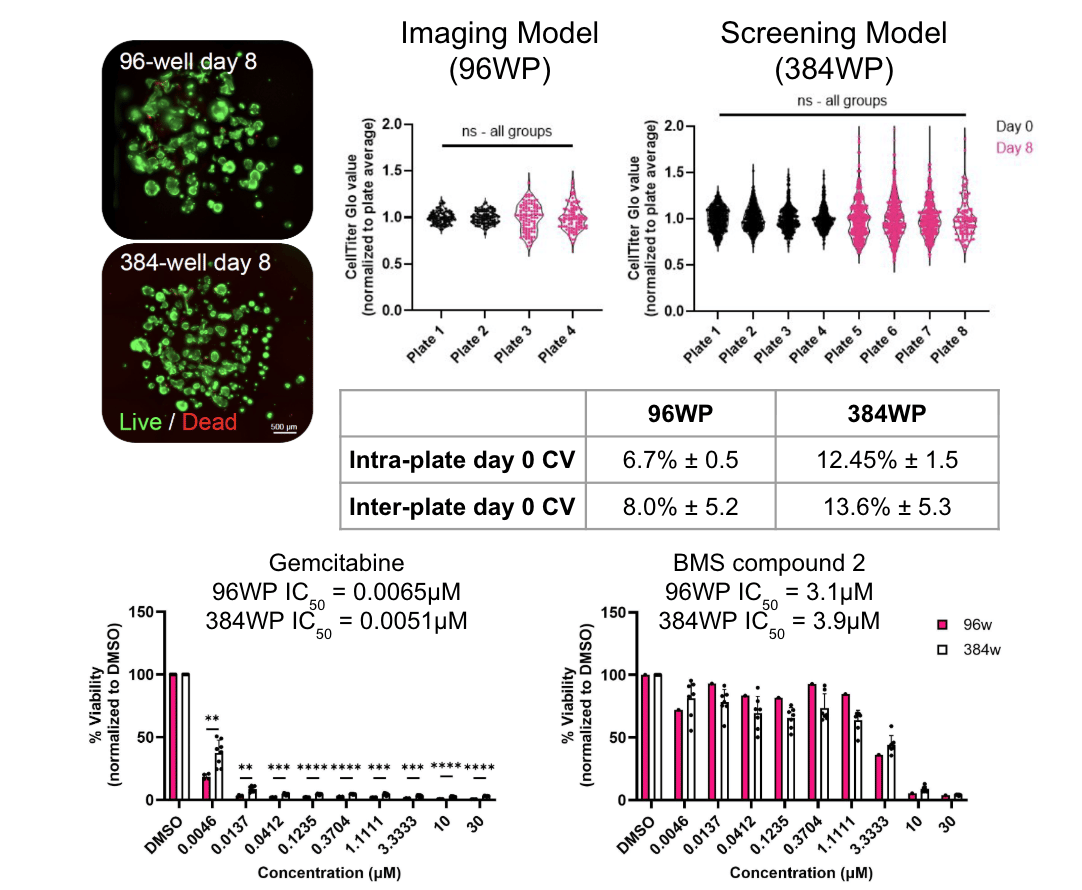
The figure depicts the development of a reproducible, high-throughput, and screenable 3D PDAC model using the RASTRUM Allegro platform. Viability of PDAC monocultures post-printing and at endpoint. Green = calcein-AM (live cells), red = EthD-III (dead cells). Scale bar = 500 μm. Reproducibility of PDAC culture viability across multiple plates and formats. Intra- and inter-plate coefficient of variation (CV) was calculated using CellTiter-Glo measurements (n=96–384 wells/plate; N=2–4 plates/format). Error = standard deviation (SD). Drug responses in PDAC monocultures printed into different plate formats. Viability was normalized to DMSO controls. n=6 wells per treatment condition; N=8 plates per compound (384w), or 1–4 plates/compound (96w). Each data point ( ) represents the average of replicate wells from a separate plate. Error bars = SD.

Disease modeling for target identification and hit identification

Understanding disease mechanisms at a cellular level is central to identifying new therapeutic targets and evaluating whether a drug candidate engages the biology that matters. RASTRUM supports 3D disease models that incorporate relevant cells, matrices, architectures, and readouts into reproducible preclinical models.

Use this approach when you need to:

  • Investigate disease-relevant phenotypes in controlled 3D environments
  • Study target biology, mechanism of action, and treatment response
  • Generate model systems that can support hit identification and early candidate evaluation
  • Move from 2D or manual 3D formats toward repeatable, plate-based workflows
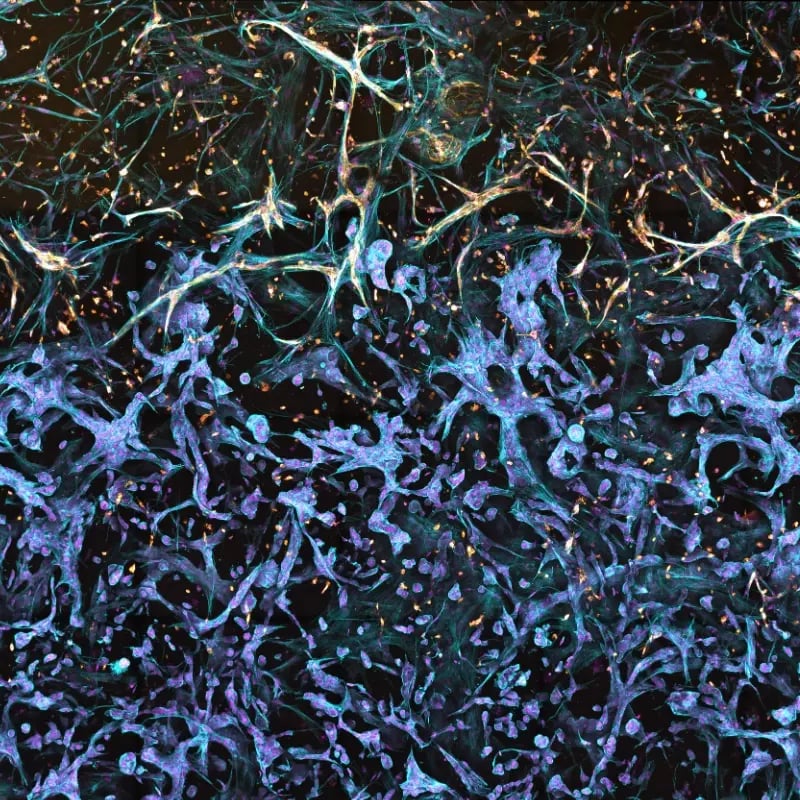
 

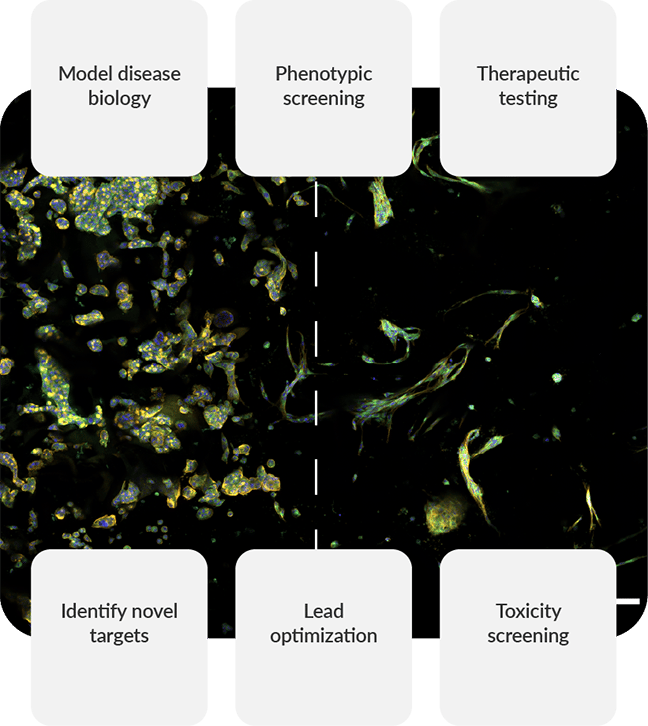
The figure depicts a model of the tumor-stroma interface in a Triple Matrix Model made with RASTRUM. Fibroblasts (primary human lung fibroblasts) and endothelial cells (primary HUVECs) were grown next to lung adenocarcinoma cancer cells (A549) and fibroblasts (HUVECs) were cultured for 10 days. Endothelial cells were stained with CD31 (yellow) and fibroblasts and endothelial cells were stained with Phalloidin (blue).

Phenotypic screening and lead optimization in 3D

Phenotypic screening depends on models that express measurable biology and generate readouts that can be compared across conditions. RASTRUM helps teams build scalable 3D models for phenotype-driven response studies, candidate comparison, and lead optimization.

This supports phenotypic drug discovery when the model needs to capture cell-cell interaction, cell-matrix interaction, morphology, viability, signaling, or disease-relevant treatment response in a controlled 3D context.

Use this approach when you need to:

  • Compare response across candidates, concentrations, or treatment schedules
  • Prioritize hits based on phenotype, viability, imaging, or other compatible readouts
  • Evaluate lead candidates in more biologically relevant 3D model conditions
  • Connect 3D model generation to high-content imaging, viability assays, cytotoxicity assays, and molecular analysis where supported by the model design
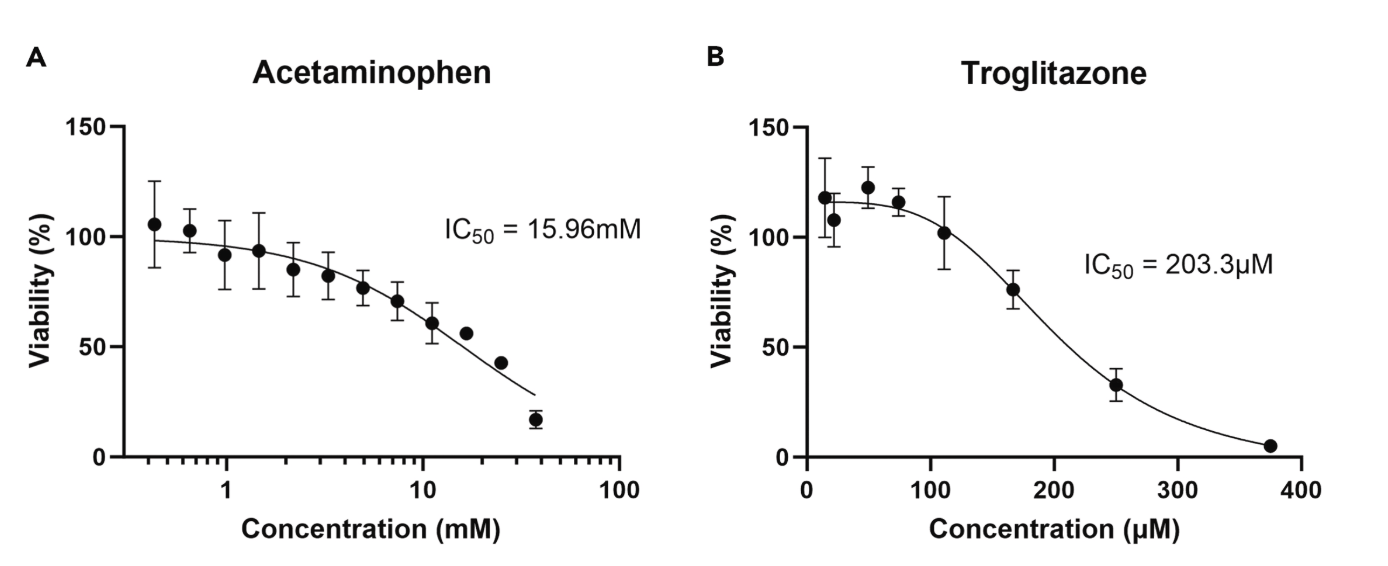
 

Image illustrates drug responsiveness testing in RASTRUM primary human hepatocyte 3D cell models. (A) Acute drug exposure to a widely used pain reliever/analgesic in RASTRUM-printed PHH achieved an IC50 comparable to other 3D PHH models. Measured by CellTiter-Glo 3D at day 5 post-printing, after 2 days (48 h) of exposure to the analgesic. Data points are means ± SDs from n = 3 technical replicates per concentration. (B) Long-term viability of PHH in RASTRUM Matrix enabled chronic drug toxicity studies with a hepatotoxic reference compound. Measured by CellTiter-Glo 3D at day 10 post-printing and after 7 days of exposure to the hepatotoxic reference compound. Data points are means ± SDs from n = 3 technical replicates per concentration. Figure 4 in the STAR Protocol: Protocol to create phenotypic primary human hepatocyte cultures using the RASTRUM 3D cell model platform

Toxicology and drug safety testing with 3D liver models

For liver safety questions, 3D liver model workflows can help researchers study hepatotoxicity, drug-induced liver injury, acute and chronic exposure, viability, and related toxicology readouts in a more biologically relevant in vitro environment. Model suitability depends on liver cell source, matrix, architecture, culture duration, exposure design, and downstream readouts.

RASTRUM primary human hepatocyte models have been used in acute and chronic drug exposure studies. Existing data on the current page show acute exposure to a widely used analgesic with an IC50 comparable to other 3D primary human hepatocyte models, and longer-term viability supporting chronic exposure studies with a hepatotoxic reference compound.

Use this approach when you need to:

    • Study liver safety questions, including hepatotoxicity or drug-induced liver injury, in a 3D liver model workflow
    • Evaluate acute or chronic exposure conditions in 3D primary human hepatocyte models
    • Measure viability, cytotoxicity, drug response, or functional and molecular readouts where compatible
    • Compare drug safety effects across defined model conditions
    • Support toxicology testing earlier in the preclinical drug development process
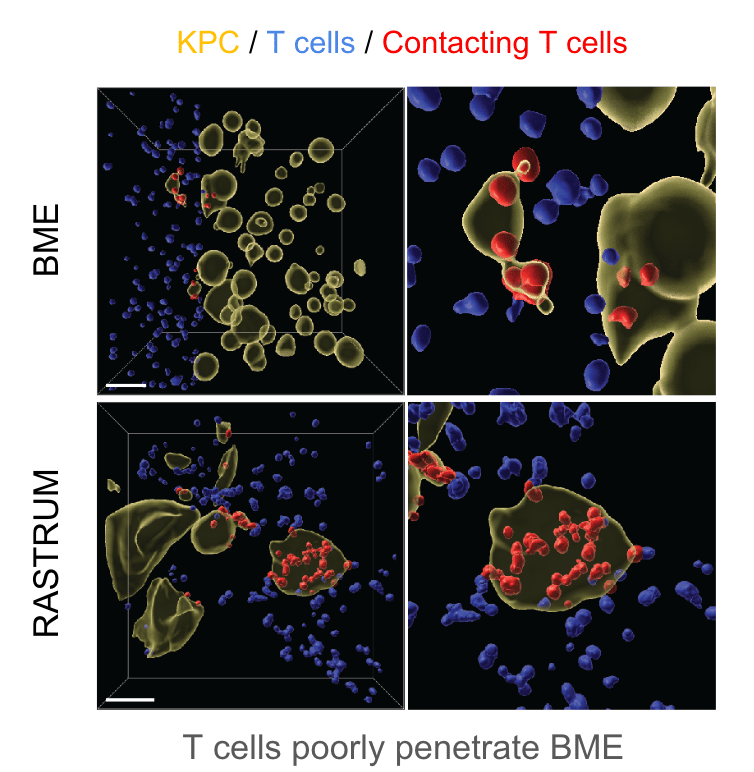


The figure depicts pancreatic cancer cells cultured in 4.8kPa matrices for 3 days before 12,000 activated cytotoxic T lymphocytes (CTLs) were added to the media in each well. Imaging and Imaris analysis shows CTL infiltration 2 days post-addition and allows quantification of interactions (red) between cancer cells (yellow) and T cells (blue) in RASTRUM matrices and basement membrane extract (BME).

Oncology drug development and drug resistance

Cancer drug discovery often requires models that capture tumor biology, stromal context, matrix effects, immune interaction, and drug resistance without losing workflow control. RASTRUM can support 3D cancer model workflows for treatment response, resistance biology, mechanism studies, and combination evaluation.

Use this approach when you need to:

    • Study drug resistance and treatment response in 3D cancer model contexts
    • Evaluate tumor-stroma interactions or immune-cell interactions where supported by the model design
    • Compare targeted therapies, biologics, combinations, or immune-modulating agents in compatible 3D models
    • Route oncology-specific questions to the Cancer applications page for deeper detail
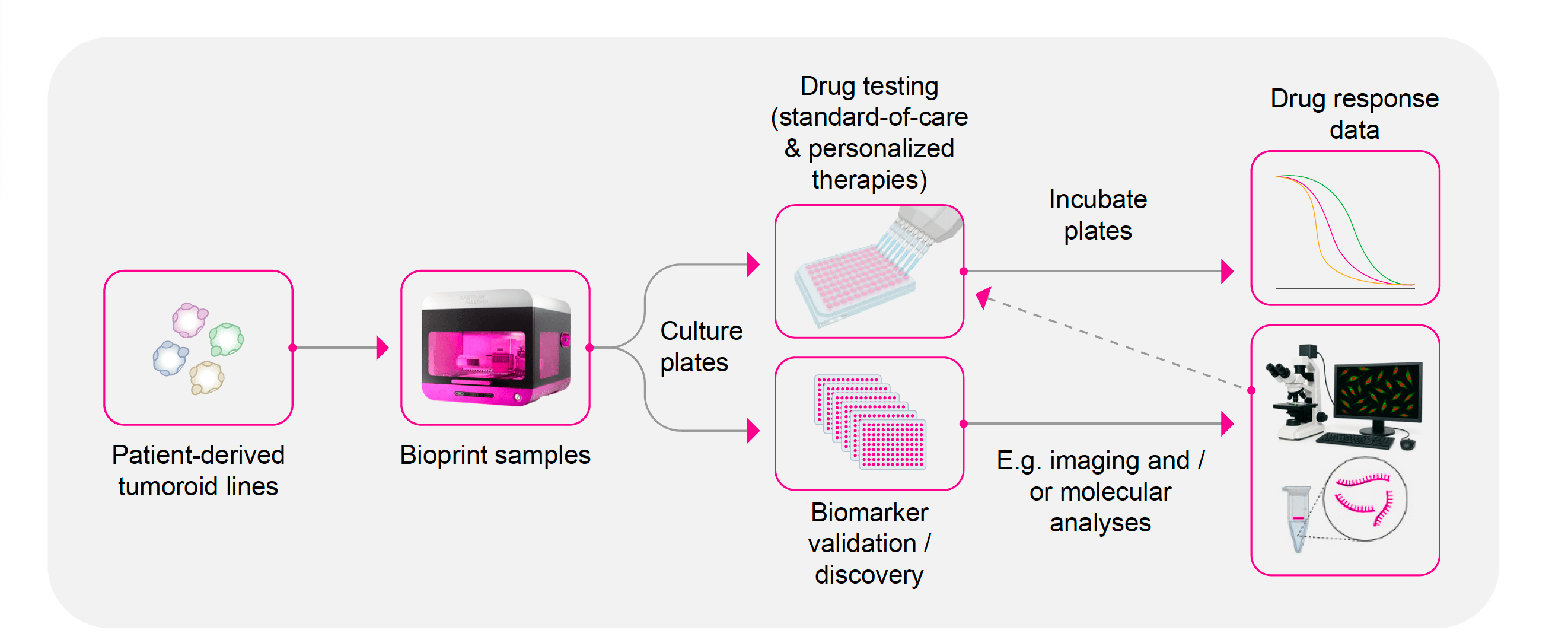


The infographic illustrates an example of how RASTRUM Allegro seamlessly integrates into translational pipelines in the precision medicine space for drug testing of standard of care and personalized therapies and biomarker validation and discovery work.

Combination therapy and patient-derived model workflows

Combination therapy studies often require controlled model systems that can compare treatment response across conditions while preserving the biology relevant to the program. Patient-derived and iPSC-derived models can help researchers study variability, sensitivity, resistance, and treatment combinations in preclinical research workflows.

RASTRUM supports 3D model workflows that can be designed around selected cells, matrix conditions, architecture, treatment timing, and downstream readouts. Suitability depends on the model system, sample availability, culture conditions, and assay design.

Use this approach when you need to:

  • Compare single-agent and combination therapy response in 3D model systems
  • Study patient-derived or iPSC-derived model response variability where compatible
  • Evaluate drug synergies, resistance patterns, or biomarker-linked response in preclinical studies
  • Support personalized medicine research without implying clinical or diagnostic use
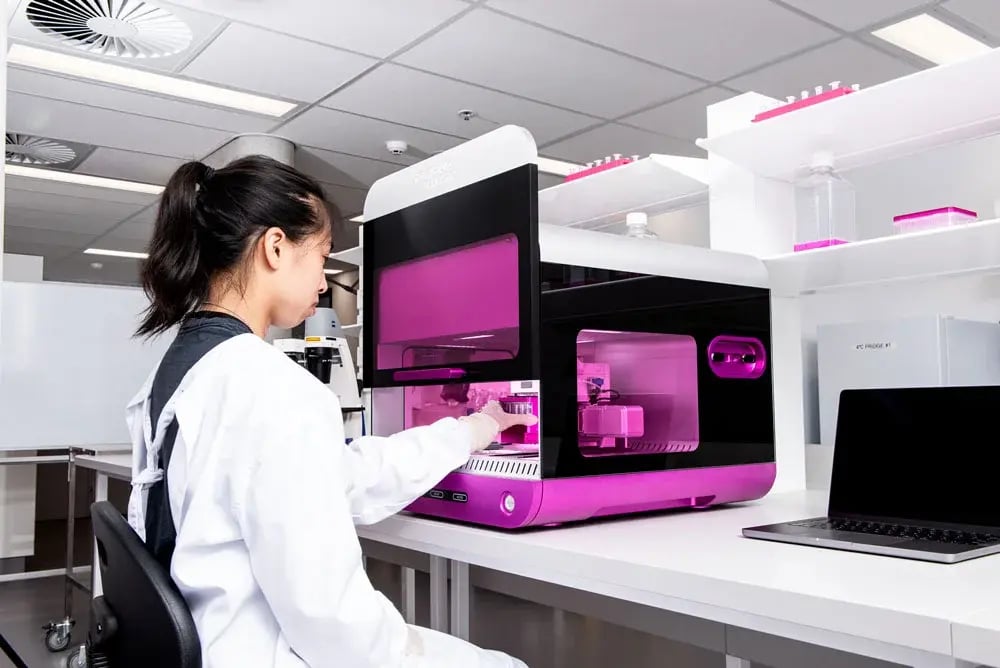


Need help building a 3D drug discovery workflow?

Some teams know the assay they want to run. Others need help selecting the right model, matrix, architecture, readouts, or scale-up path. Inventia scientists can help you assess which RASTRUM workflow path fits your drug discovery question, whether that means flexible model development, a proven starting workflow, or custom Discovery Services support.

  • Discuss a 3D liver model or toxicology workflow
  • Assess whether a model is suitable for phenotypic screening or lead optimization
  • Evaluate oncology, drug resistance, combination therapy, or patient-derived model needs
  • Plan matrix, architecture, plate format, and downstream readouts before implementation
FAQs
How do 3D models support drug discovery workflows?

3D models can help drug discovery teams study cell-cell interaction, cell-matrix signaling, morphology, viability, treatment response, drug resistance, and disease-relevant phenotypes in model systems that better reflect the biology being investigated. RASTRUM helps researchers generate matrix-embedded 3D models in plate-based formats that can connect to imaging, viability, cytotoxicity assays, molecular analysis, and other downstream readouts where compatible with the model design.

How can 3D models improve drug discovery compared with 2D culture?

2D cultures remain useful for many early experiments, but they often miss three-dimensional cell organization, matrix interaction, and multicellular behavior. They may also miss specific physical factors (e.g. stiffness) and chemical gradients. 3D models can provide a more biologically relevant context for studying morphology, signaling, viability, treatment response, and disease-associated phenotypes. The value depends on the cell source, matrix, architecture, culture conditions, and readouts.

How can 3D liver models support hepatotoxicity and drug-induced liver injury research?

3D liver models can support hepatotoxicity and drug-induced liver injury research by enabling longer-term culture, treatment exposure, viability assessment, and functional or molecular readouts in a 3D microenvironment. RASTRUM primary human hepatocyte workflows can be designed around acute or chronic exposure studies when the liver cell source, matrix, architecture, culture duration, and assay design are appropriate.

How does RASTRUM support phenotypic screening and lead optimization?

RASTRUM supports phenotypic screening and lead optimization by generating reproducible, matrix-embedded 3D models that can be connected to compatible readouts such as imaging, viability, cytotoxicity assays, high-content imaging, and molecular analysis. These workflows can help teams compare candidate response across defined model conditions and move promising compounds into lead optimization studies.

Can RASTRUM support combination therapy studies?

Yes, RASTRUM workflows can support combination therapy studies when the model, treatment timing, plate format, and readouts are appropriate. Researchers can design 3D models to compare single-agent and combination response, evaluate resistance patterns, or study treatment effects in patient-derived, cancer, stromal, liver, or other model systems where technically compatible.

What downstream assays can be used with RASTRUM-generated 3D models?

Depending on model architecture and protocol, RASTRUM-generated 3D models can be compatible with downstream assays such as biochemical analysis, viability, cytotoxicity assays, high-content imaging, immunofluorescence, immunohistochemistry, dose-response analysis, gene expression, sequencing, RNA/DNA analysis, protein analysis, and flow cytometry. Readout selection should be planned around the biological question and model format.

Can RASTRUM workflows integrate with automated liquid handling, imaging, or analysis systems?

RASTRUM-generated models can be planned for compatibility with automated liquid handling systems, robotic workstations, high-content imaging, and automated image analysis when the plate format, model architecture, staining workflow, assay, and equipment are suitable. RASTRUM Allegro is a high-throughput 3D model generation instrument, not a full end-to-end automation platform.

Can RASTRUM help reduce reliance on animal-derived matrices or animal models?

RASTRUM workflows can help researchers use defined 3D in vitro models and synthetic or xeno-free matrix options where compatible. These workflows may reduce reliance on some animal-derived extracellular matrix materials or animal studies in research workflows, but they do not universally replace animal models.

Can RASTRUM Allegro be used for patient-derived or personalized medicine research?

RASTRUM Allegro is intended for research use only. In preclinical research workflows, it can support patient-derived or iPSC-derived model development, drug response studies, and treatment-response variability research where cell source, matrix, architecture, culture conditions, and readouts are suitable. It is not for diagnostic procedures.